Urine is about 95% water. It flows down by itself.
Waterless Urinals · Zerodor
Not a Drop to Flush. Not a Whiff of Odour.
Zerodor waterless urinals save up to 1.7 lakh litres of water per urinal every year and keep washrooms fresh, with a small mechanical valve that needs no water, cartridge or chemicals. Your existing urinals can be converted.
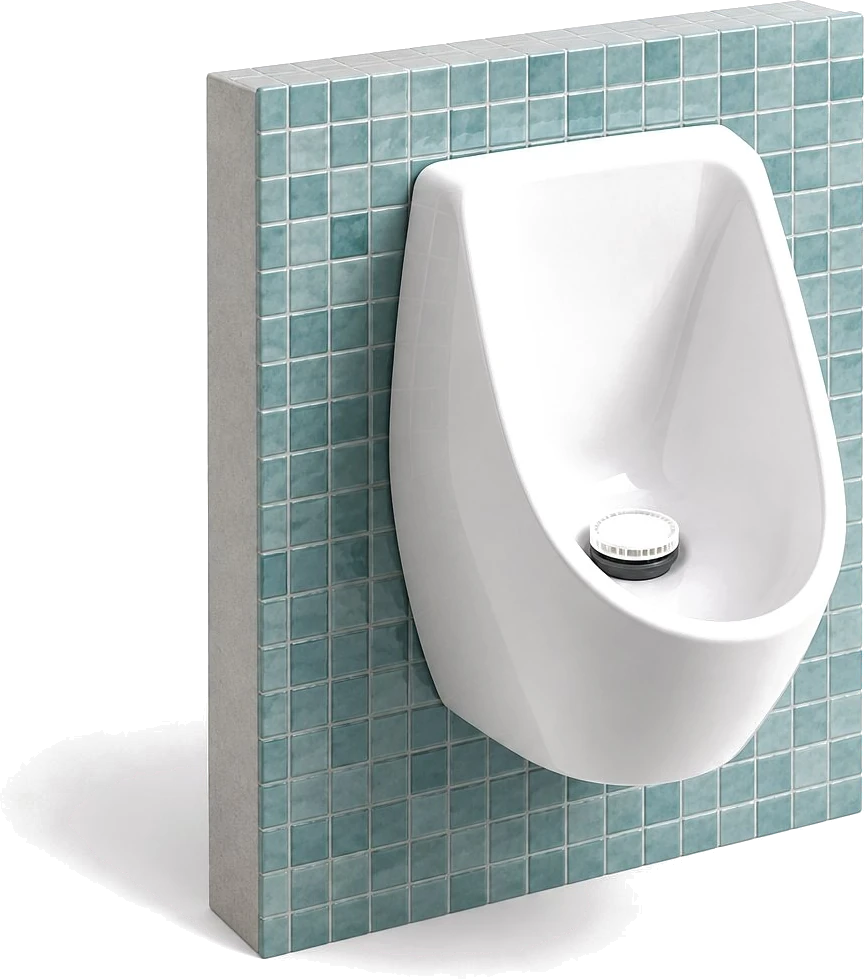
What You Gain
- Water saved from the first use.
- Every flush you no longer make is water kept in the supply.
- Less to go wrong.
- No flush valves, sensors or supply pipes to repair.
- Works where water is unreliable.
- Washrooms stay usable even when the supply is short.
- Converts what you have.
- Existing urinals are converted with a retrofit kit that replaces the waste coupling.
The cost of a flush
One Urinal. 15 Water Tankers a Year.
A busy flush urinal can send about 1.5 lakh litres of fresh water down the drain every year, only to carry urine that would flow away on its own.
1.5 lakh litres a year for a busy urinal, shown as 10,000-litre tankers. Zerodor puts the saving at 57,000 to 1,70,000 litres per urinal a year.
15tankers a yearEach drop is one 10,000-litre tanker.
See the difference
Same Washroom. Minus the Flush.
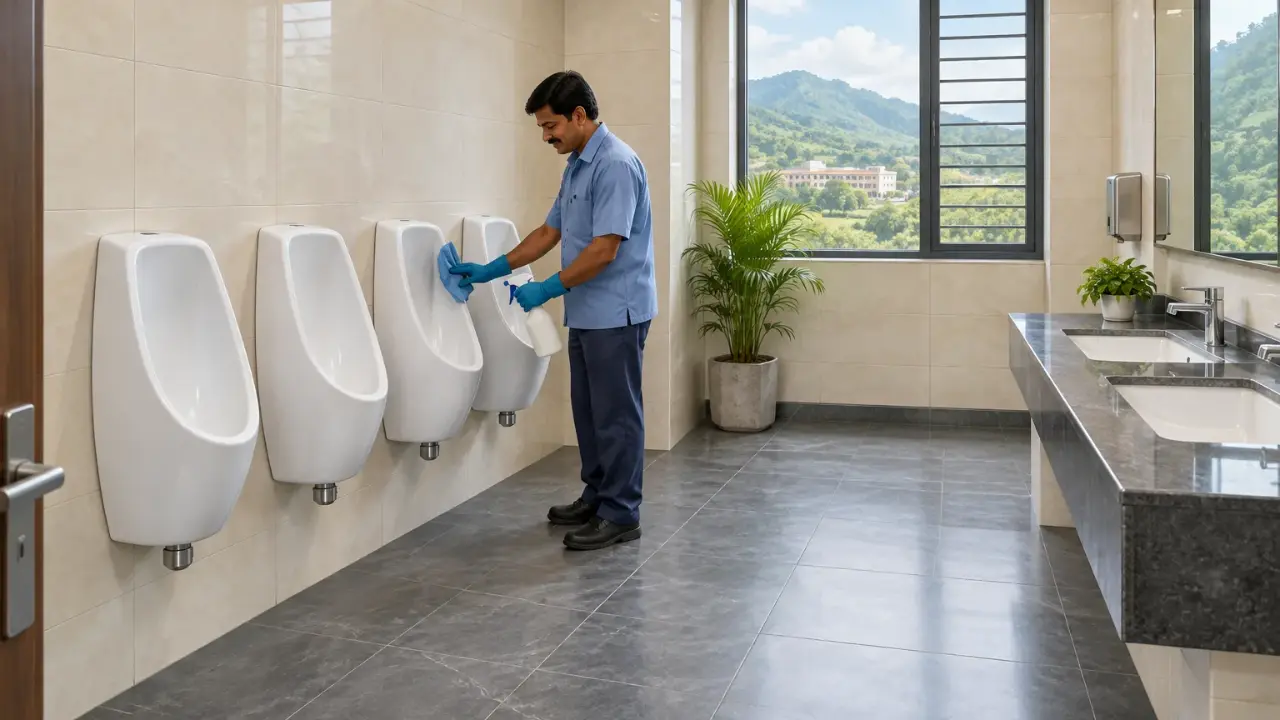
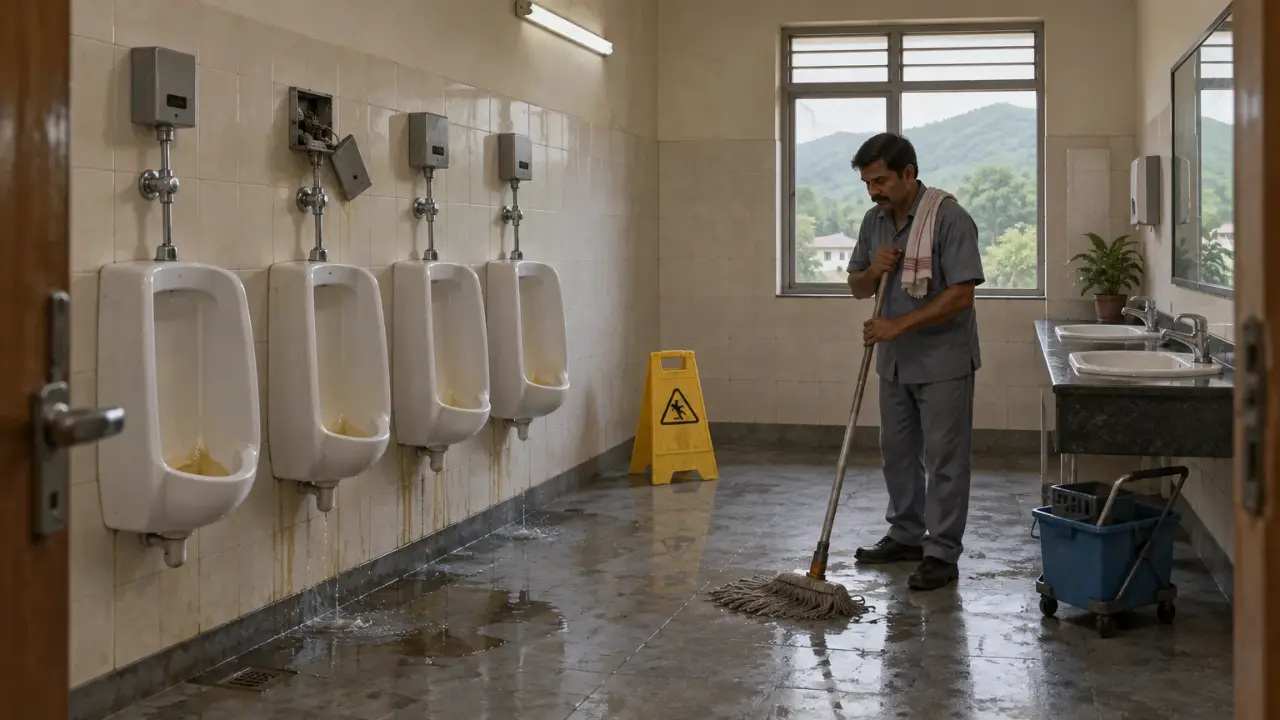
- Litres of water on every flush
- Leaks, wet floors and broken sensors
- Smell rising from the drain
- Not a drop of water
- Dry floors, nothing to leak
- Drain sealed against odour
Illustrations.
Myth vs fact
Why We Still Flush
The smell is ammonia from the drain line. Seal the drain and it stays there.
A mechanical valve has nothing to refill or replace.
Source: Zerodor technology information.
The science, simply
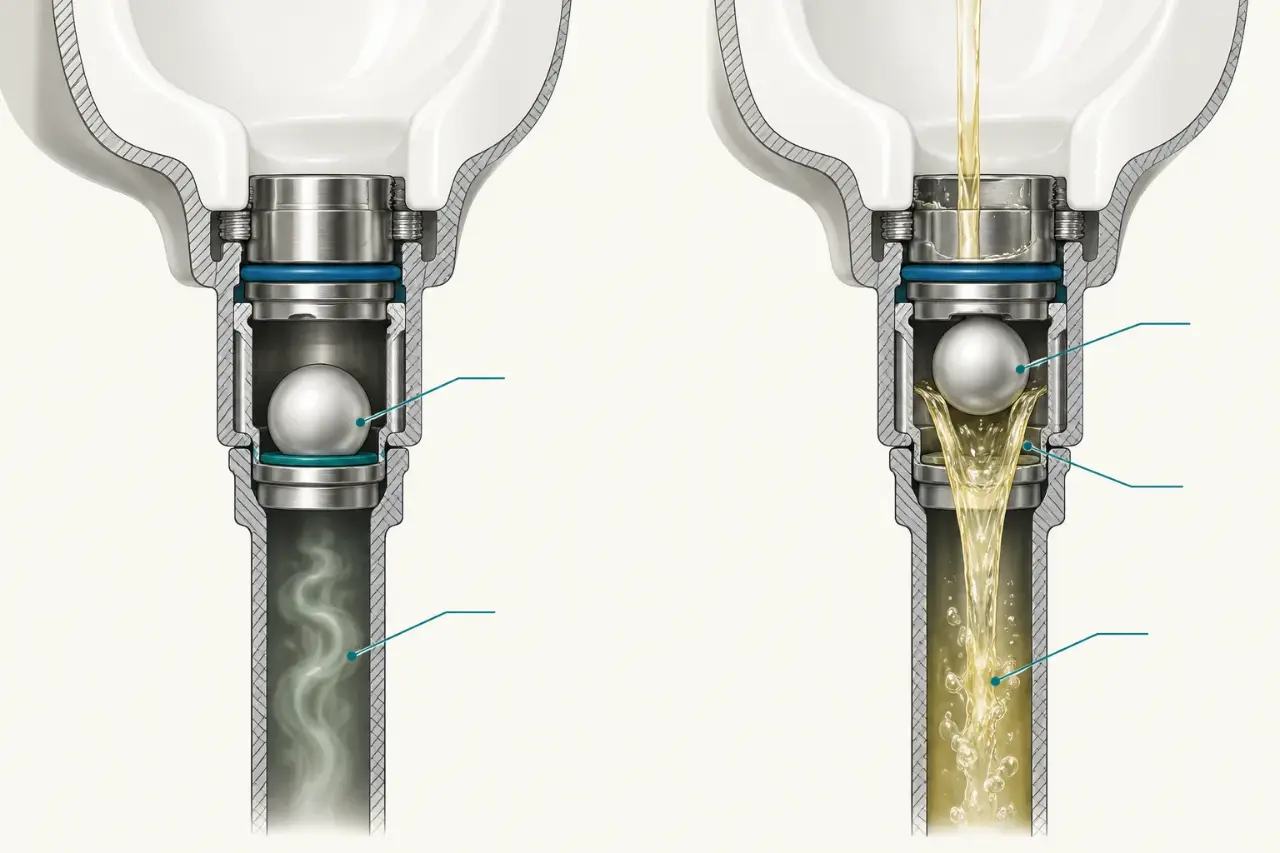
The Smell Isn't the Urine. It's the Drain.
So instead of rinsing the bowl with water, we close the drain.
- Urine flows inAbout 95% water, it drains on its own.
- A ball valve opens, then closesIt lifts as liquid passes and drops back to seal.
- Odour stays belowAbout 98% of urinal smell comes from the drain line.
Illustration. Figures: Zerodor (Ekam Eco Solutions).
How it compares
Three Ways to Run a Urinal
| Compared | Zerodor mechanical valve | Cartridge urinal | Flush urinal |
|---|---|---|---|
| Water per use | None | None | 1 to 4 litres |
| Your existing urinals | Converted with a retrofit kit | Needs a special pan | Already fitted |
| How odour is stopped | Mechanical seal on the drain | Chemical layer in a cartridge | Water held in the trap |
| Running cost | Nothing to replace | Cartridges, again and again | Water, plus valve and sensor repairs |
| Chemicals | None | Yes | None |
Based on Zerodor's published comparison of waterless urinal technologies.
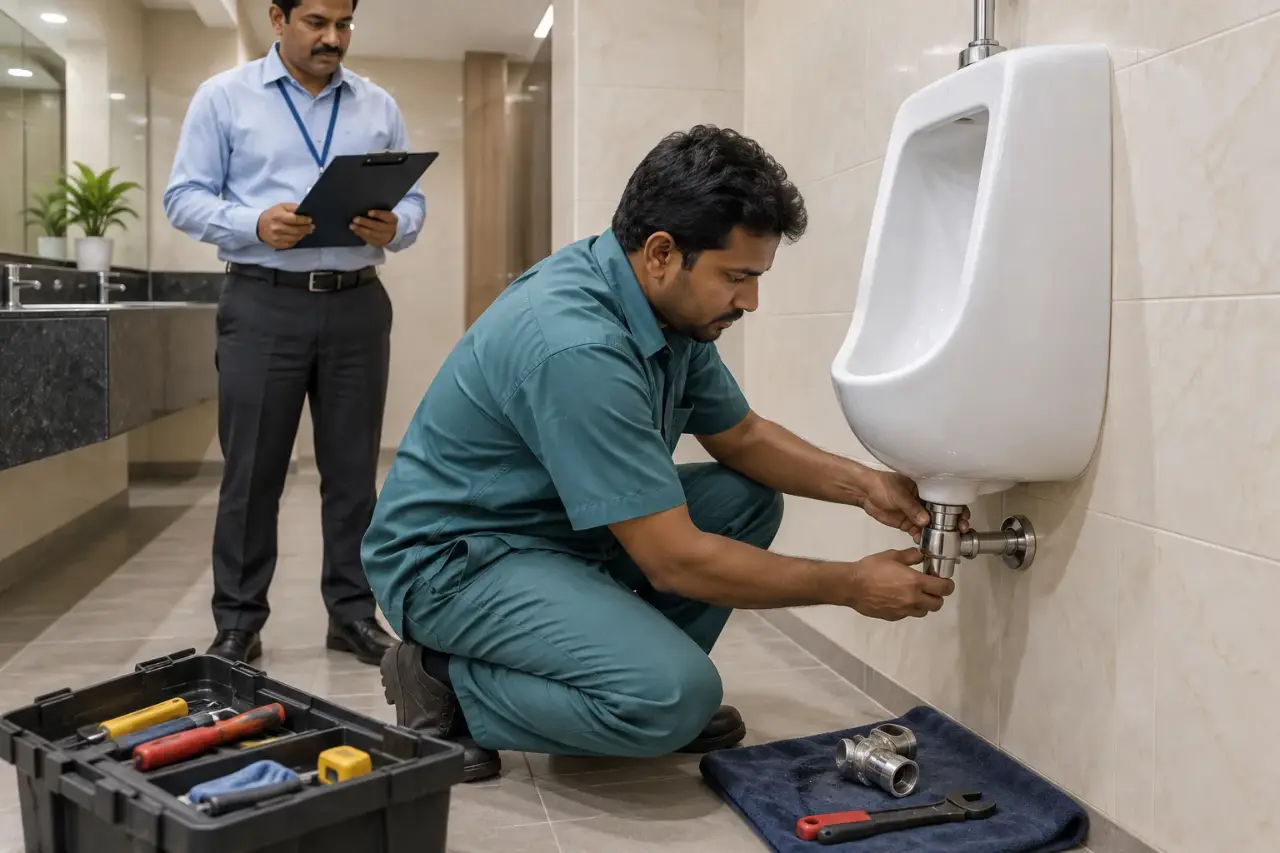
Retrofit
Keep Your Urinals. Lose the Flush.
Most washrooms don’t need new pans. We convert the ones you already have.
- Fitted in placeA retrofit kit replaces the waste coupling under the urinal.
- No new plumbingNo flush pipes, sensors or power to add.
- Your staff, shown onceDaily cleaning, and a 15-minute deep clean twice a week.
Why switch
What One Small Valve Saves
- Up to 1.7 lakh litres a yearPer urinal, per year.
- Flush hardwareNo flush pipes, valves or sensors to buy or fix.
- Odour, without chemicalsThe drain is sealed, not masked.
- Pumping costsLess water to pump up to the tanks.
- Load on your sewage plantLess water in the drains to treat.
- Green building pointsGreen Pro certified, supports LEED ratings.
- About six monthsTypical time to recover the cost.
- 30,000+ installationsAcross India since 2013.
Figures published by Zerodor (Ekam Eco Solutions). Savings depend on how many people use each urinal.
Made for
Made for Busy Washrooms

Offices and government buildingsHundreds of uses a day, no flush.

Schools, colleges and hostelsFresh between cleans, even at peak hours.

Hospitals and health centresDry, odour-free, fewer parts to fail.

Bus stands and public toiletsStill usable when the tanker is late.
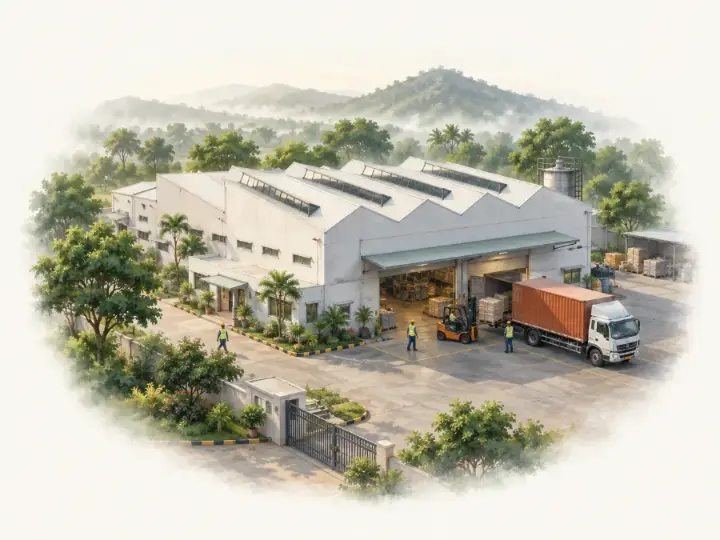
Factories and workplacesWhere every litre is pumped or trucked in.

Hotels, malls and restaurantsFresh washrooms guests notice.
Questions
Do waterless urinals smell?
Not when they are cleaned as recommended. The sealed trap stops odour coming back from the drain.
What does cleaning involve?
Daily cleaning, and a 15-minute deep clean twice a week. No cartridge to replace.
How much water will we save?
Zerodor puts it at 57,000 to 1,70,000 litres per urinal a year, depending on how often it is used and the flush it replaces. The cost is typically recovered in about six months. The real figure depends on how many people use each urinal; we estimate it for your site.
Can our existing urinals be converted?
Yes. A retrofit kit replaces the waste coupling of an existing urinal, so it works without water.
Solutions
Solutions for Water and Waste, Matched to Your Site.
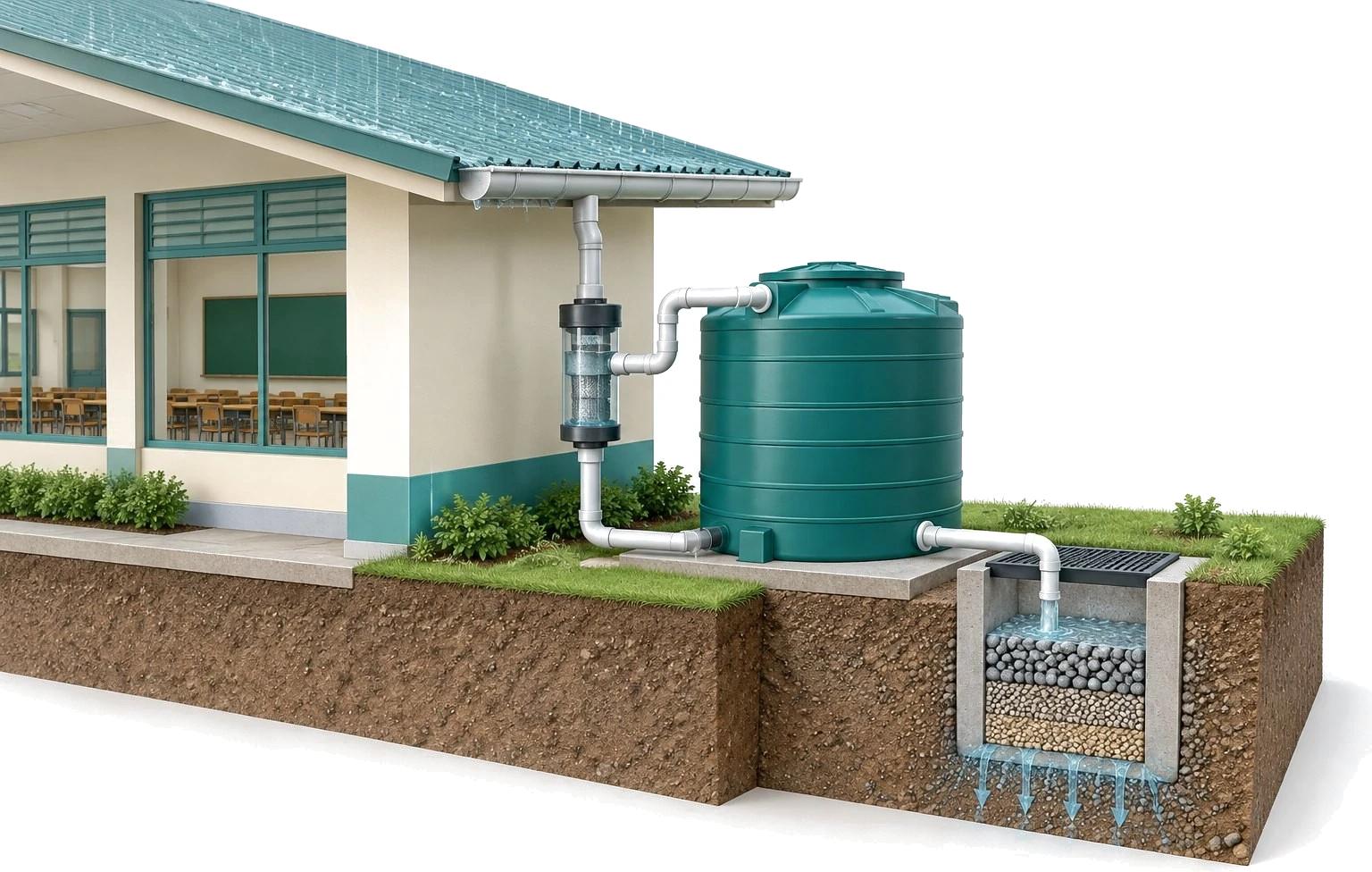 Water conservation
Rainwater Harvesting
Rain from roofs and paved areas, stored or returned to the ground.
Learn More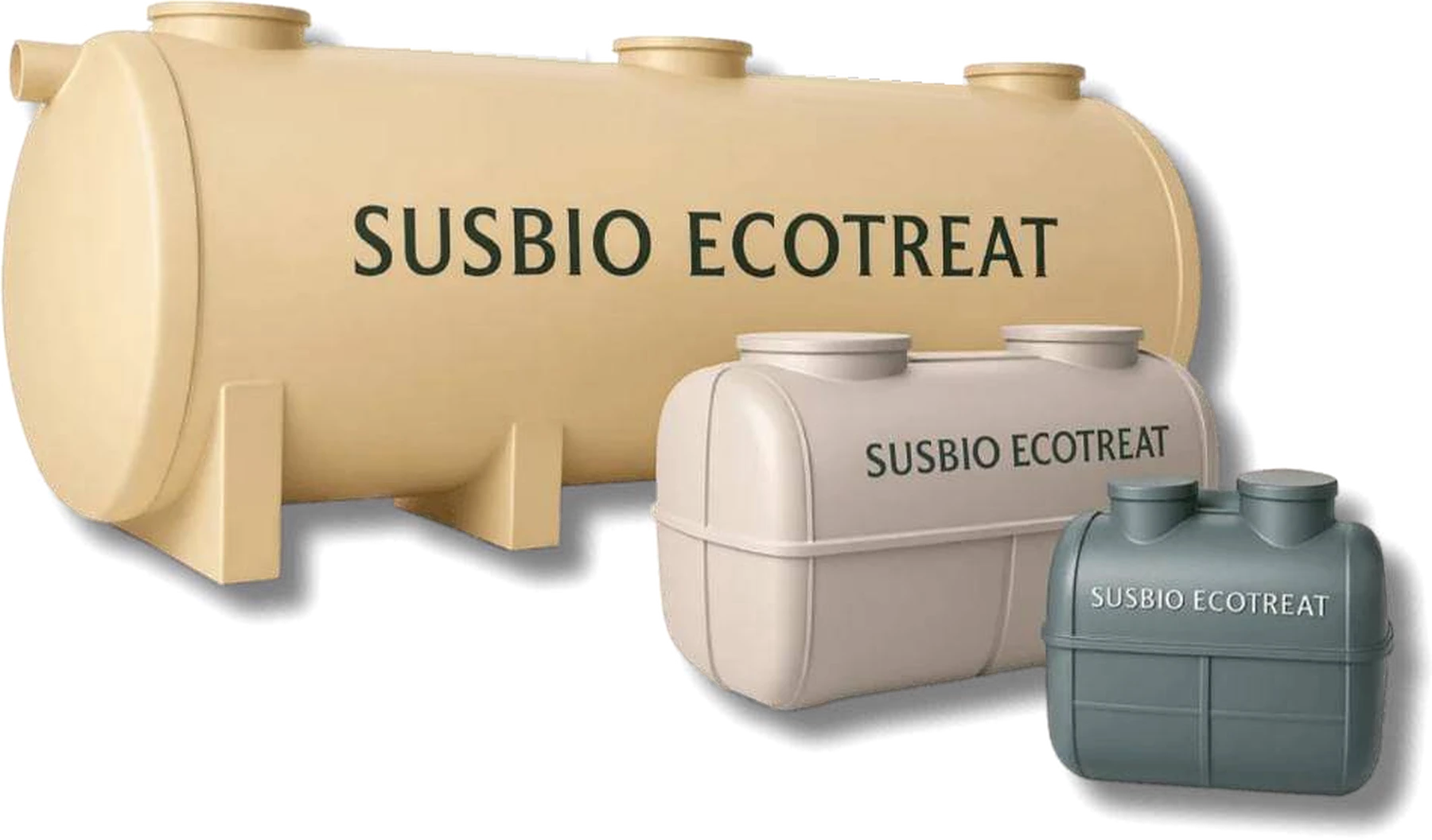 Wastewater and sludge
Sewage Treatment · EcoTreat
A compact plant below ground that turns sewage into water for reuse.
Learn More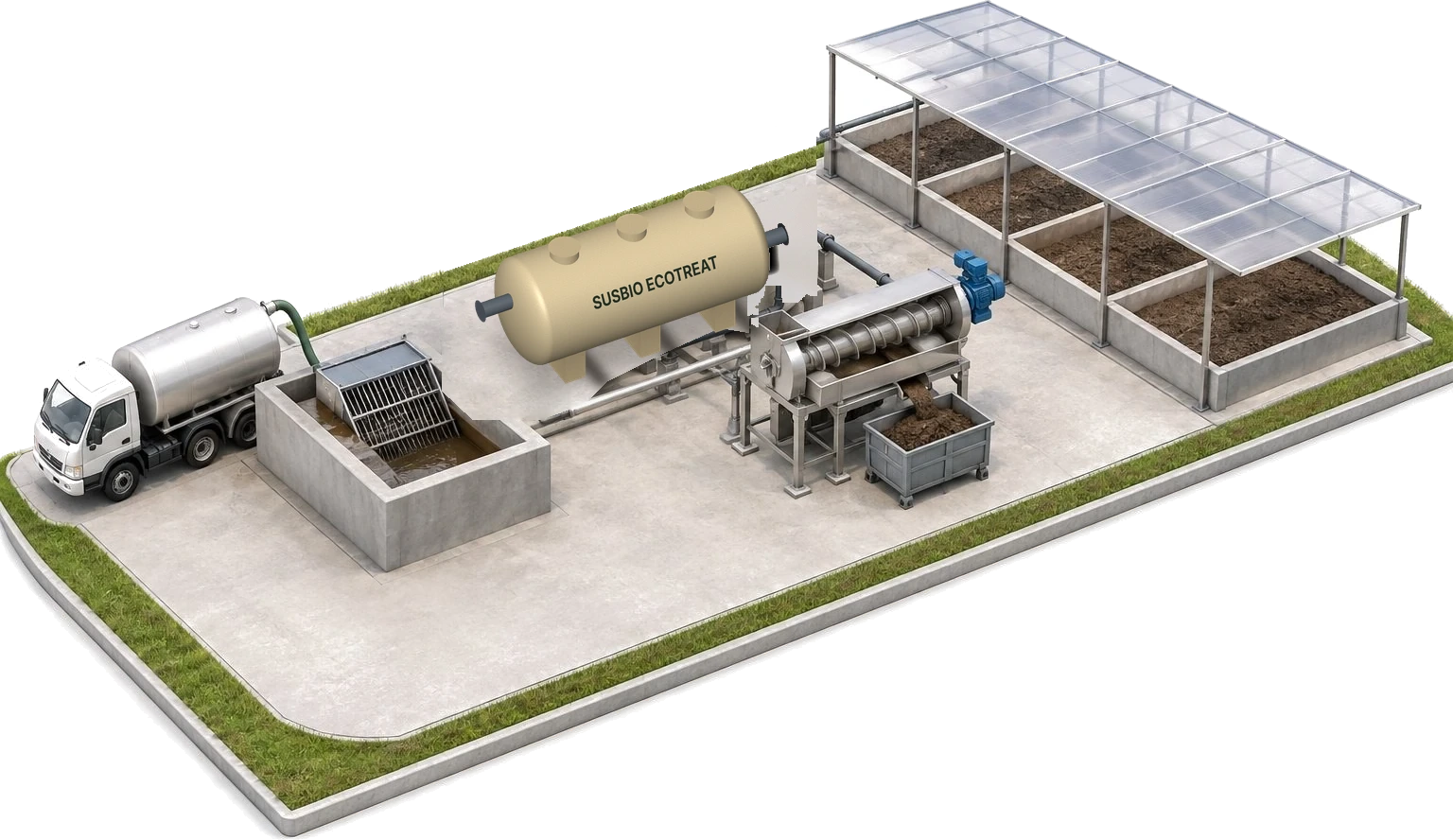 Wastewater and sludge
Faecal Sludge Treatment
A safe destination for the sludge emptied from septic tanks.
Learn More