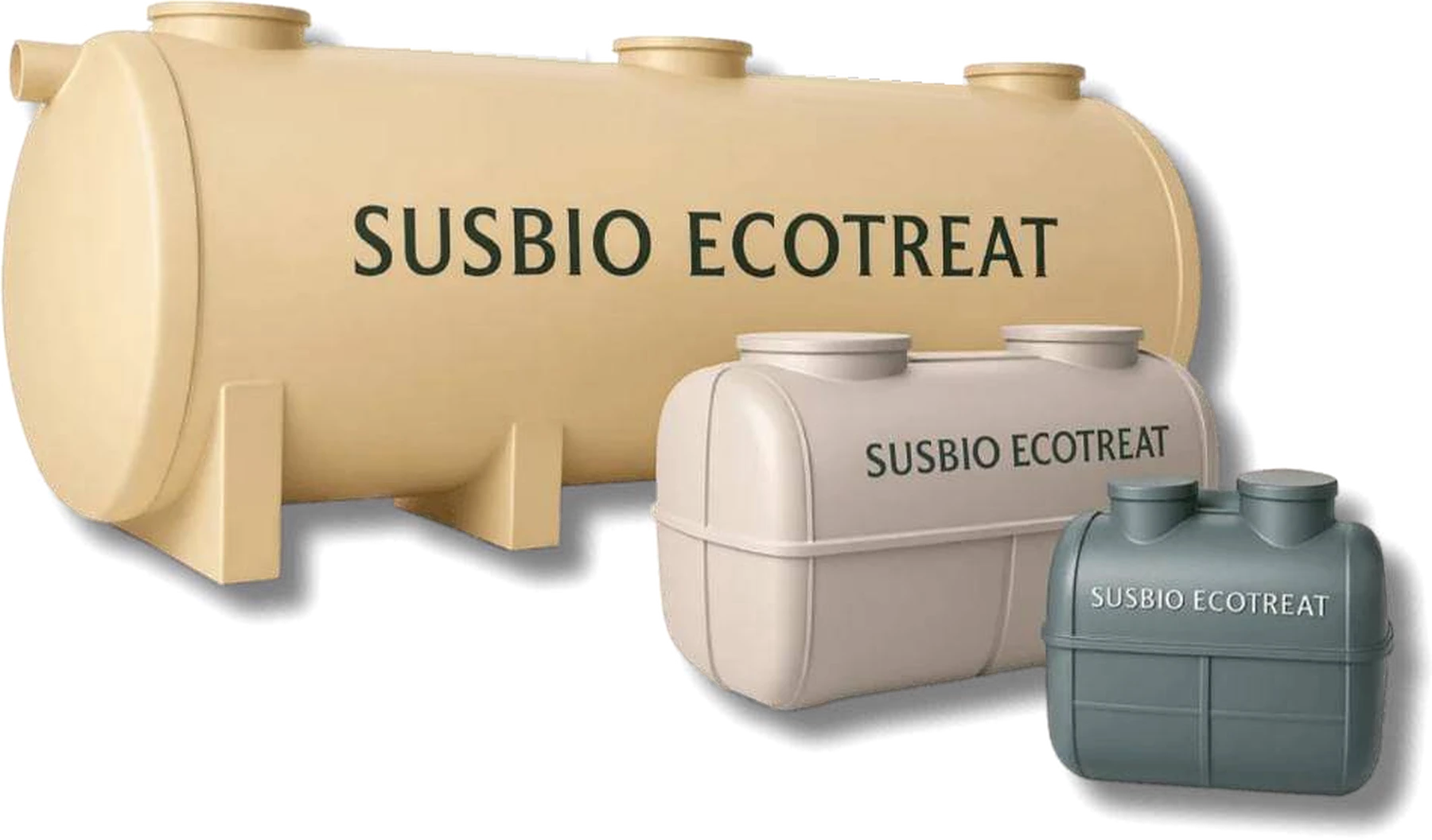
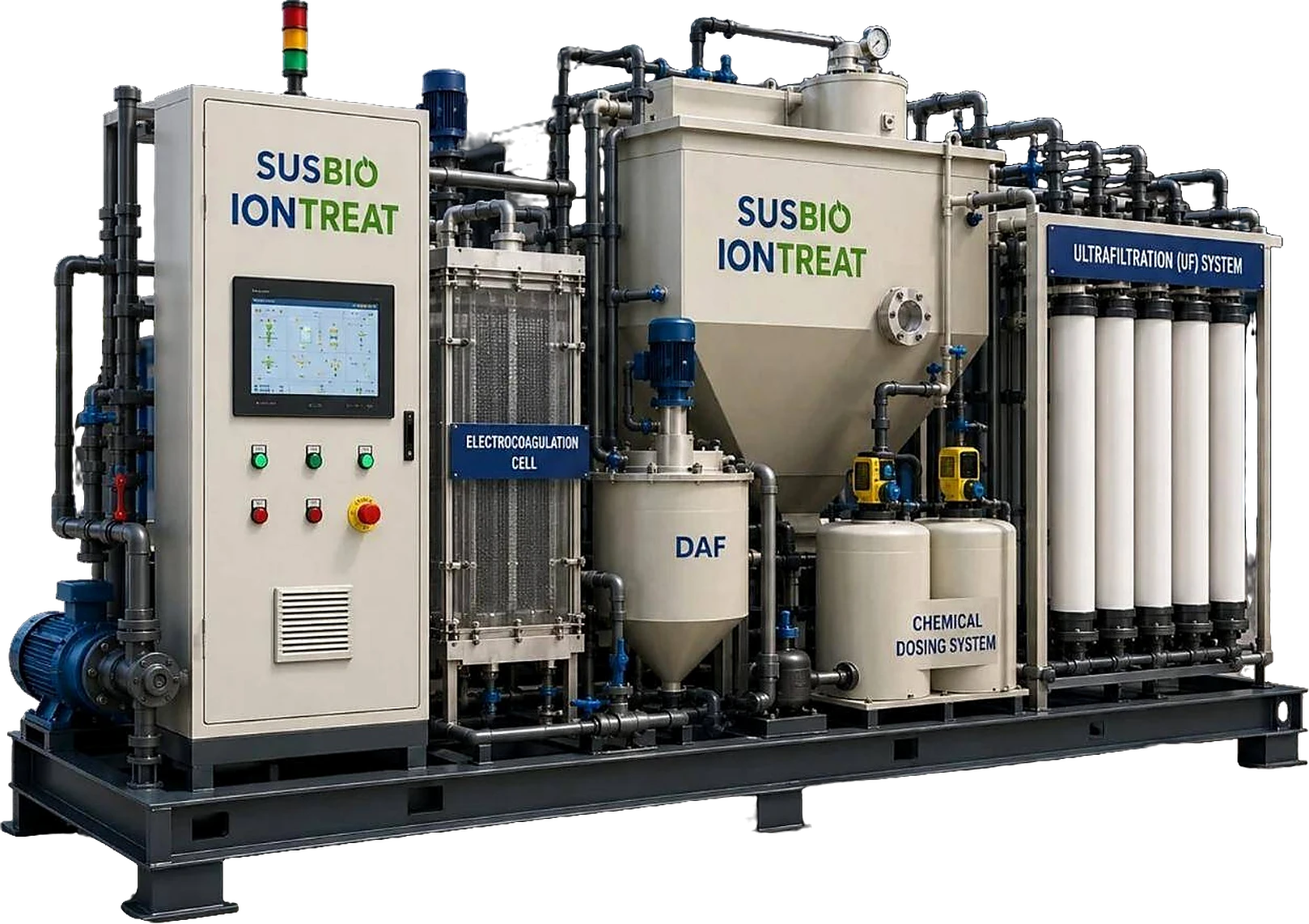
Only if the sludge is treated. Dumped, it reaches water.
Faecal Sludge Treatment
Septic Tank Sludge, Given a Safe Place to Go.
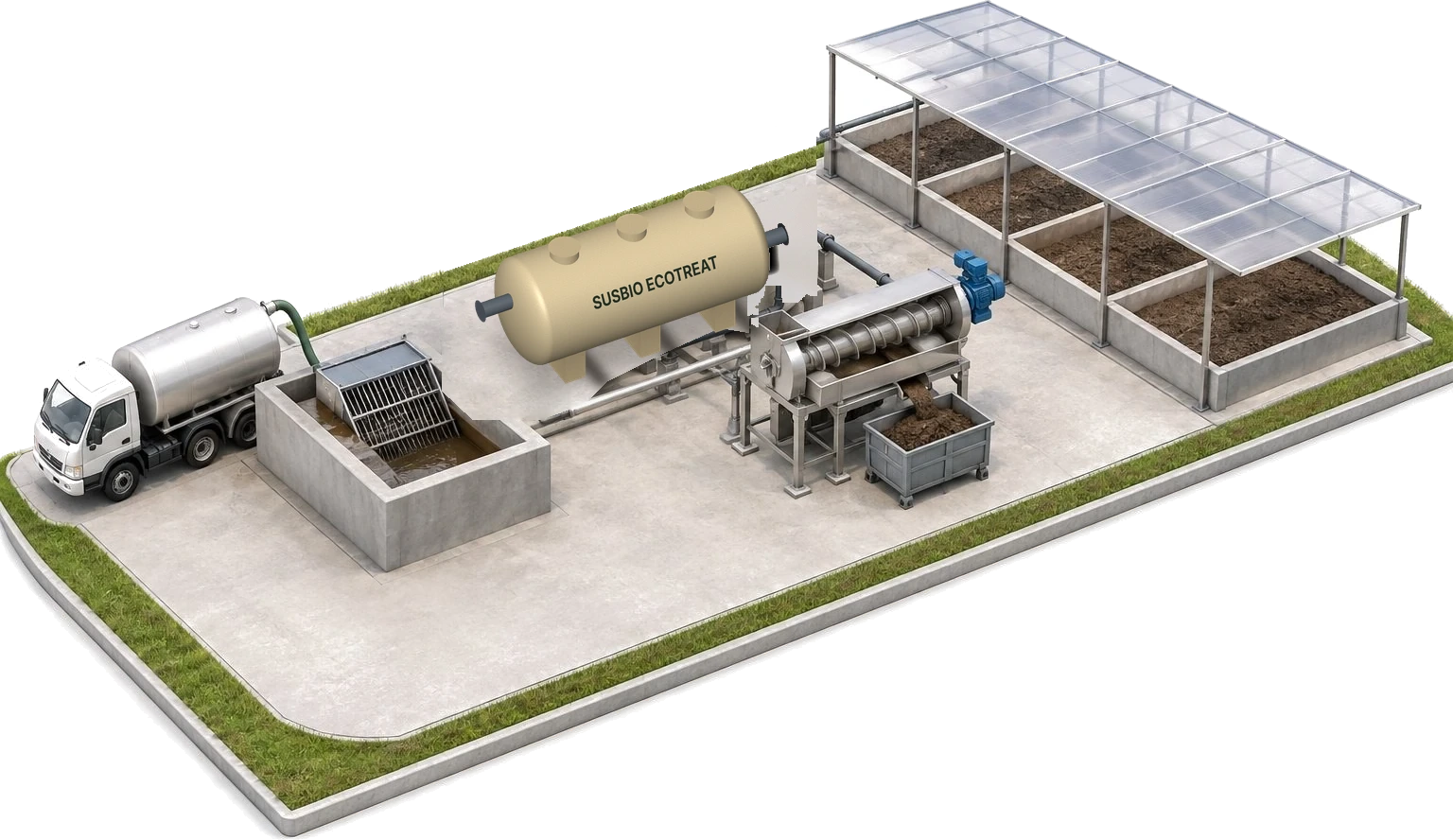
A faecal sludge treatment plant receives sludge from desludging tankers, separates solids from liquid and treats both, so pathogens and nutrients no longer reach land and water.
How It Works
- Receiving and screening.
- Desludging tankers empty into a screened inlet that catches rubbish and grit.
- Biological treatment.
- Bacteria break down the organic load in the sludge.
- Screw-press dewatering.
- A screw press separates the solids from the liquid, which is treated further.
- Drying beds.
- The pressed solids are dried and stabilised.
- Safe output.
- Treated water for reuse or discharge, and dried sludge for co-composting or soil conditioning after testing.
Every septic tank gets emptied
The Question Is Where the Sludge Goes.
A faecal sludge plant gives a whole town one safe place to take it, on a plot about the size of a badminton court.
Land for a 10 KLD plant, from our detailed project report for Ampati, Meghalaya.
85m² for 10 KLDAbout one badminton court (82 m²).
See the difference
From the Roadside to a Treatment Plant.
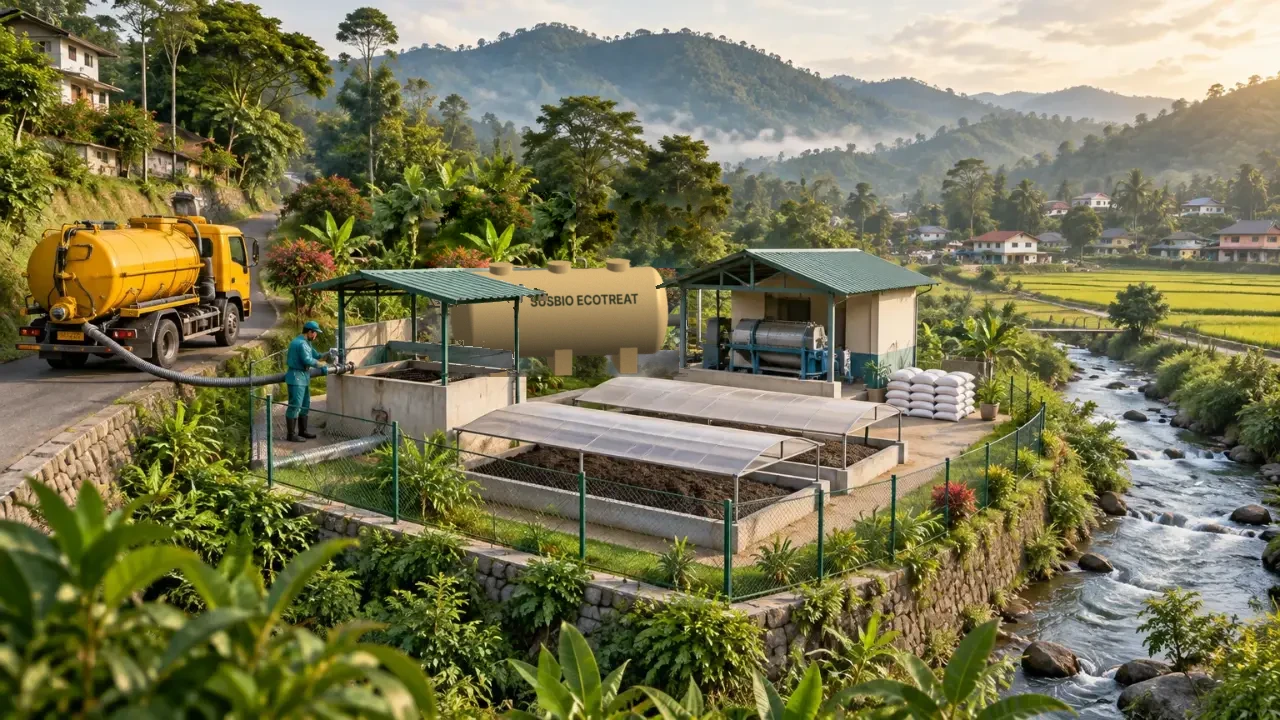

- Sludge tipped onto land and into streams
- Pathogens in wells and fields
- Smell and flies
- Every tanker load treated
- Water reused or discharged within limits
- Dried sludge for soil, after testing
Illustrations.
Myth vs fact
What Gets Missed About Septic Tanks
An FSTP serves septic tanks. No sewer network needed.
Dried and tested, it can condition soil.
How it works
From Septic Tank to Safe Reuse
- Septic tankEmptied on schedule.
- Desludging tankerCarried to the plant, not a drain.
- ScreeningRubbish and grit caught at the inlet.
- Biological treatmentBacteria break down the load.
- Screw pressSolids pressed apart from liquid.
- Drying and reuseDried sludge for soil; water reused.
At a Glance
- Capacity
- Typically 10 to 15 KLD of sludge for a block-level town
- Land needed
- About 85 m² (900 sq ft) for a 10 KLD plant; the equipment itself takes about 51 m²
- Outputs
- Treated water for non-potable reuse or discharge within state pollution-control board limits; dewatered, dried sludge for co-composting or soil conditioning after pathogen testing
Capacity and land from Vaari Nirvana's detailed project reports for Ampati (10 KLD, July 2026) and Baghmara (15 KLD). Each plant is sized to the town it serves.
What a town gains
Cleaner Water. Healthier Streets.
- Cleaner waterSludge stops reaching wells and streams.
- Healthier neighbourhoodsFewer dumping spots, less smell.
- Ready for programme fundingPlanned with a detailed project report.
- Local jobsOperators, drivers and technicians.
- Something backDried sludge for soil, after testing.
- Small footprintAbout 85 m² for 10 KLD.
Made for
Made for Towns, Clusters and Large Campuses
An FSTP is shared: it treats the sludge from many septic tanks, so it serves a town, a cluster of villages or a large campus rather than a single home or building. For one building, a packaged sewage treatment plant fits better.

Towns and municipalitiesWithout a full sewer network.

Clusters of villagesSharing one facility.

Large campusesInstitutions running on septic systems.
Running It
An FSTP only works if the trucks keep coming and the plant keeps running. We operate and maintain it with a team hired locally, including drivers for sludge collection where that is part of the scope.
Our Work
Follow the Project Questions
Is an FSTP the same as a sewage treatment plant?
No. A sewage plant treats wastewater carried by pipes. An FSTP treats the thick sludge emptied from septic tanks, which needs different handling.
What happens to the dried solids?
The screw press and drying beds turn them into dried sludge. After pathogen testing, it can be co-composted or used as a soil conditioner.
Can you run the collection trucks too?
Collection can be part of the scope. We hire and train local drivers for it.
Wastewater and Sludge
Sewage, septic sludge and industrial effluent each need different handling. We help you choose the right system, and we stay to keep it working.