Big bubbles rise and burst in seconds. Nanobubbles stay.
Nanobubble Technology
Oxygen, Delivered Where the Water Needs It Most.
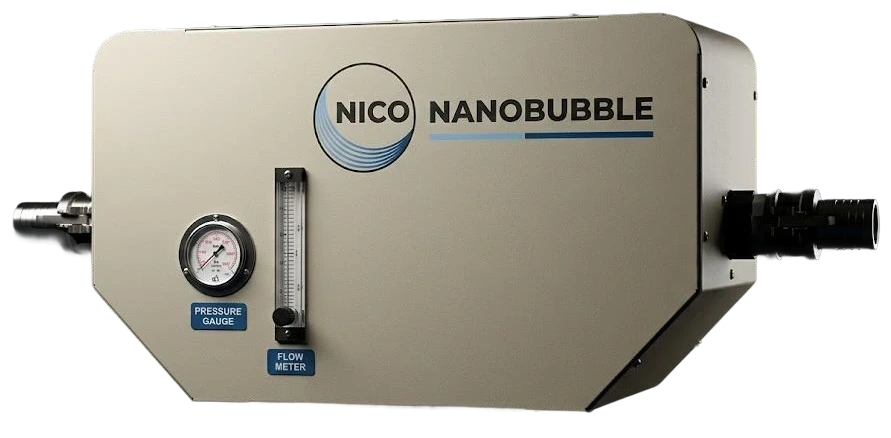
A nanobubble generator dissolves air, oxygen or ozone into water as bubbles of 50 to 200 nanometres. Instead of rising and bursting at the surface, they stay suspended, raising dissolved oxygen. That supports the aerobic breakdown of organic load and suppresses algae, without chemicals.
Where It Is Used
- Lakes, ponds and temple tanks that lack oxygen
- Stretches of river with low oxygen levels
- Sewage and drains, where more oxygen helps the bacteria work (NICO VARUNA)
- Aquaculture ponds, where steady oxygen supports the fish (NICO MATSYA)
How small
Bubbles Hundreds of Times Thinner Than a Hair.
Too small to float up and burst, they stay in the water and carry oxygen all the way down.
Bubble size: NICO Nanobubble India product information (niconanobubbles.com).
50–200nanometresA human hair is roughly 70,000 nm wide.
See the difference
Give a Lake Its Breath Back.

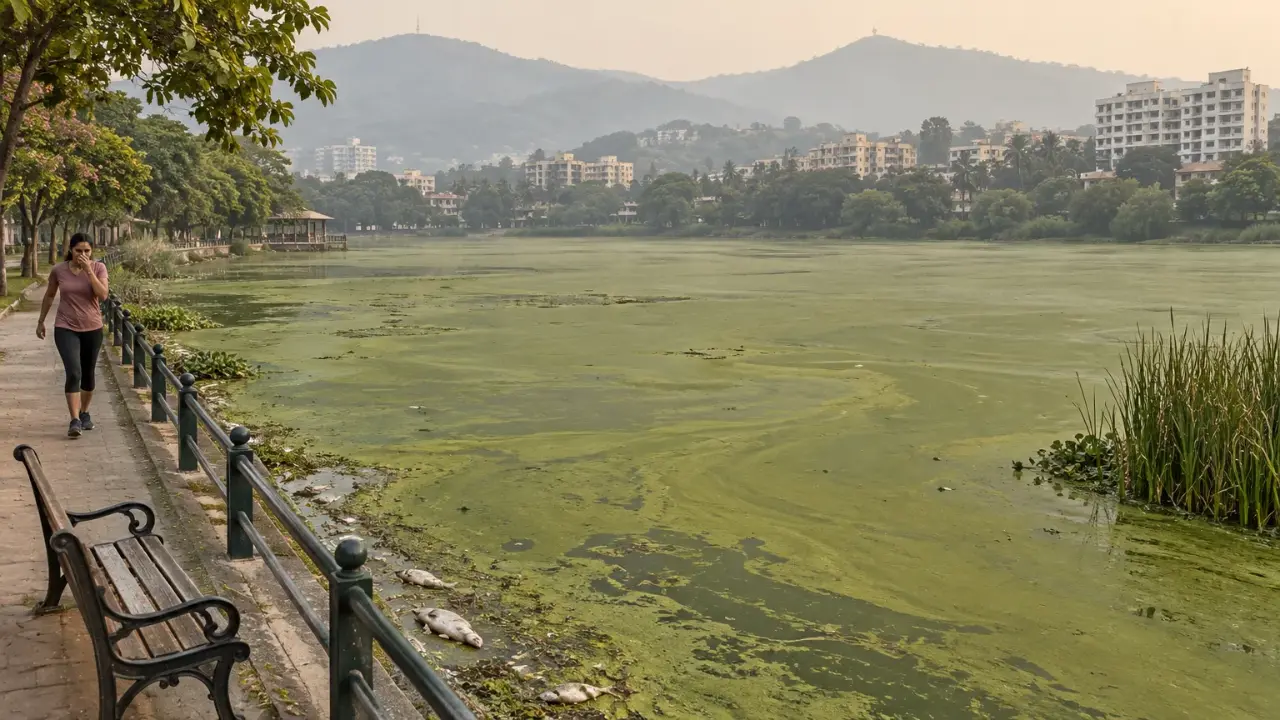
- Algae over the surface
- Fish kills in the hot months
- Odour along the shore
- Oxygen through the whole water column
- Algae held back without chemicals
- A shore people use again
Illustrations.
Myth vs fact
What People Believe About Aeration
They treat symptoms. Oxygen lets the water recover itself.
Not if sewage keeps flowing in. Treat that first.
The science, simply
Why Tiny Bubbles Work Better.
Same water, two ways of putting air into it. Hover a number to see each part: terracotta for an ordinary diffuser, petrol for NICO.
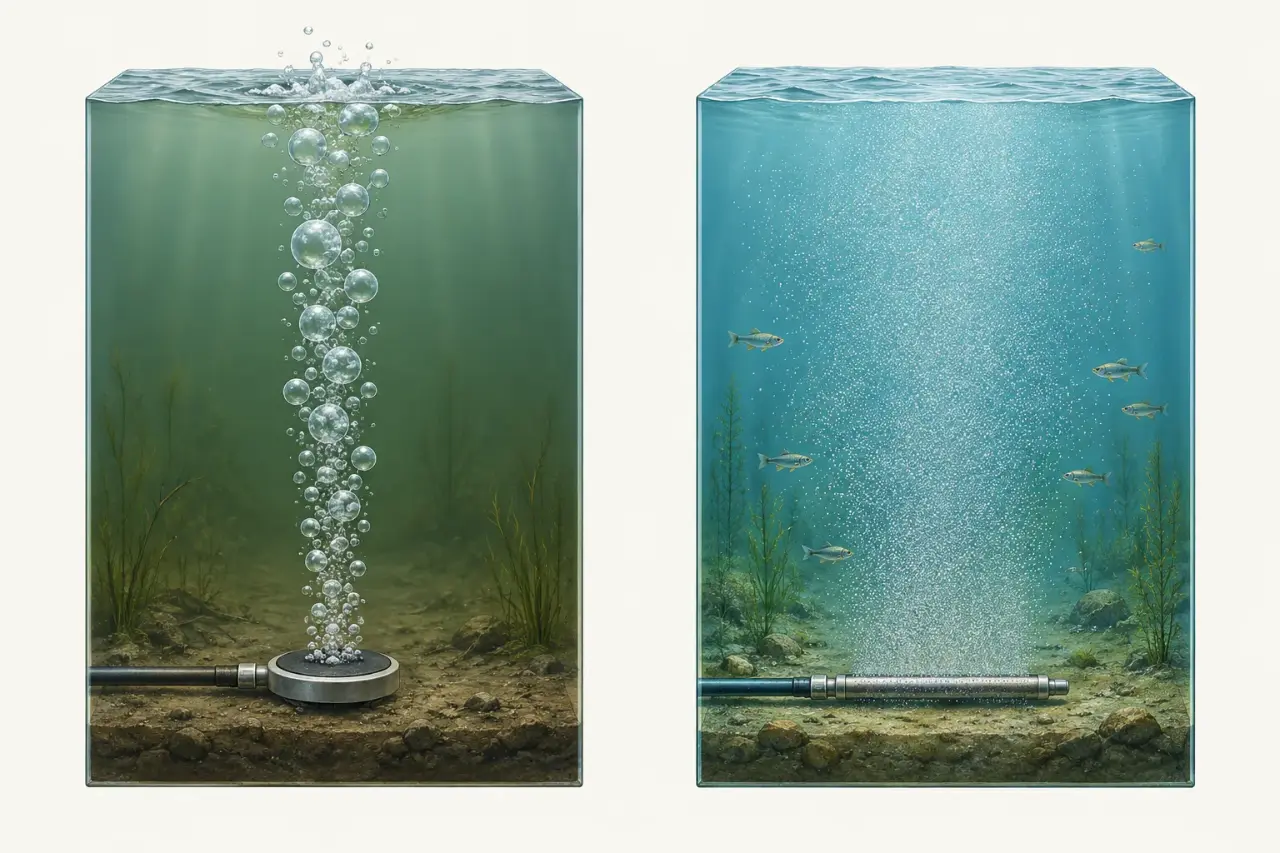
Ordinary Diffuser
- Ordinary diffuserPushes air out as bubbles you can see, millimetres across.
- A narrow plumeBig bubbles are buoyant. They race straight up, touching little water on the way.
- Burst at the surfaceMost of the air escapes back into the sky within seconds.
- Deep water stays starvedAway from the plume, and near the bottom, oxygen stays low.
NICO Nanobubbles
- NICO nanobubble outletReleases bubbles of 50 to 200 nanometres, too small to see.
- A haze that staysNegatively charged (zeta potential up to −43 mV), the bubbles repel each other instead of merging, and hang in the water.
- The water recoversWith oxygen everywhere, bacteria break down organic load and algae lose ground. Fish return.
Illustration. Bubble size, charge and transfer efficiency (over 85%): NICO Nanobubble India product information (niconanobubbles.com).
On site
What a NICO System Looks Like on a Lake.
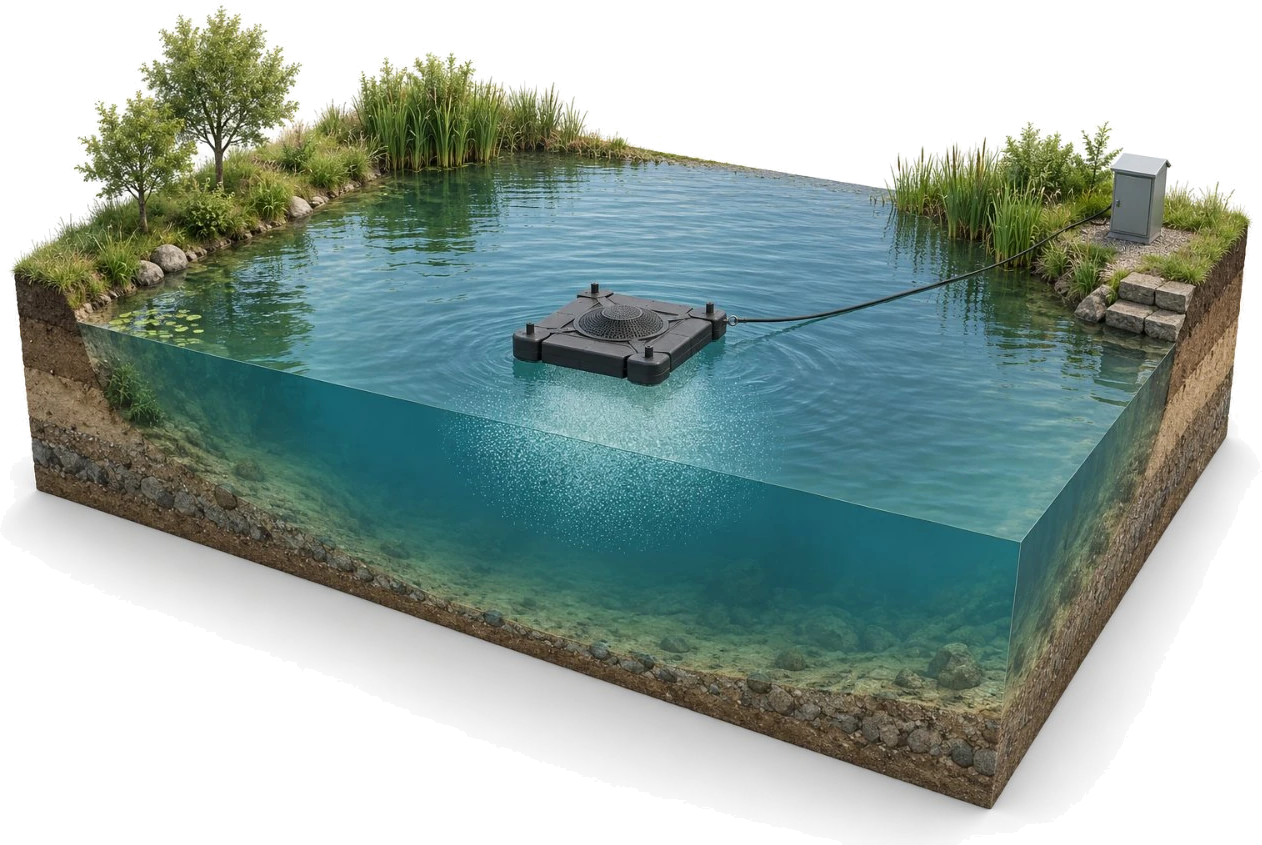
Hardly anything you would notice: a small kiosk on the bank and a float on the water.
- Shore kioskHouses the pump, the NICO generator and the gas supply: air, oxygen, or ozone for heavier pollution.
- Supply lineCarries power and nanobubble-rich water out to the floats.
- Floating unitMoored where the water needs oxygen most. Land-based units are also available.
- Oxygen haloNanobubbles spread from each unit through the full depth of the lake.
- Sized to the waterMore units, or a larger model, for a larger lake.
- Life returnsClearer water, birds and fish: tracked against a baseline test, not judged by eye.
Illustration. Floating and land-based configurations: NICO Nanobubble India product information (niconanobubbles.com).
By the numbers
Small Bubbles. Measurable Results.
50–200nmBubble size
85%+Gas-transfer efficiency
0Chemicals added
100m³/hrLargest standard model
NICO Nanobubble India product information (niconanobubbles.com). Results depend on what flows into the water.
The range
One Technology, Sized to the Water
From a temple tank to a city lake, the same generator comes in six standard sizes.
| NICO VYOM model | 0.05 | 01 | 05 | 10 | 30 | 100 |
|---|---|---|---|---|---|---|
| Water flow (m³ an hour) | 0.054 | 1.35 | 5 | 10 | 30 | 100 |
| Gases | Air, oxygen | Air, oxygen, ozone | Air, oxygen, ozone | |||
| Oxygen feed (litres a minute) | 0.7 | 1.5 | 7 | 14 | 40 | 133 |
| Working pressure (bar) | 2 | 2 to 3 | ||||
| Pipe size, in / out (inch) | – | 1.5 / 1 | 1.5 / 1 | 2 / 2 | 3 / 3 | 4 / 4 |
| Bubble size | 50 to 200 nm on every model; zeta potential up to −43 mV | |||||
NICO VYOM for lakes and ponds, NICO VARUNA for sewage and drains, with the same model sizes. Larger and custom sizes (20, 50, 250, 500 and 1,000) are made to order. NICO Nanobubble India product information (niconanobubbles.com). NICO does not publish power use per model; we confirm it for your water body during the assessment.
Where it is used
Wherever Water Is Short of Oxygen

Lakes and pondsNICO VYOM, floating or on the bank.

Temple tanksOdour and algae controlled without chemicals.

River stretchesOxygen raised where levels are low.

Sewage and drainsNICO VARUNA helps the bacteria work.
At a Glance
- Gas used
- Air, oxygen or ozone
- Equipment
- NICO VYOM for lakes and ponds; NICO VARUNA for sewage and drains
- Bubble size
- 50 to 200 nm; gas-transfer efficiency above 85%
- Unit sizes
- NICO VYOM models from 0.054 to 100 m³ an hour (54 to 1,00,000 litres an hour), floating or land-based
- Site needs
- A power supply; floating or bank-mounted, with minimal civil work
NICO Nanobubble India product information (niconanobubbles.com). NICO's published references include Manchikere Lake, Karnataka, and the Krishna Matha temple pond, Udupi.
Questions
Is it safe for fish and plants?
The process adds oxygen, which fish and plants need, and NICO lists better fish survival among its benefits for lakes and fish ponds. We choose the gas and the dose for each water body and track dissolved oxygen against a baseline test.
Does it replace treating the sewage that flows in?
No. If sewage is entering the water, the lasting fix is to treat it before it arrives. Nanobubbles help the water recover; they do not stop what pollutes it.
Solutions
Solutions for Water and Waste, Matched to Your Site.
 Lakes and rivers
Water-Body Restoration
A measured plan for a lake, pond or river stretch, from testing to results.
Learn More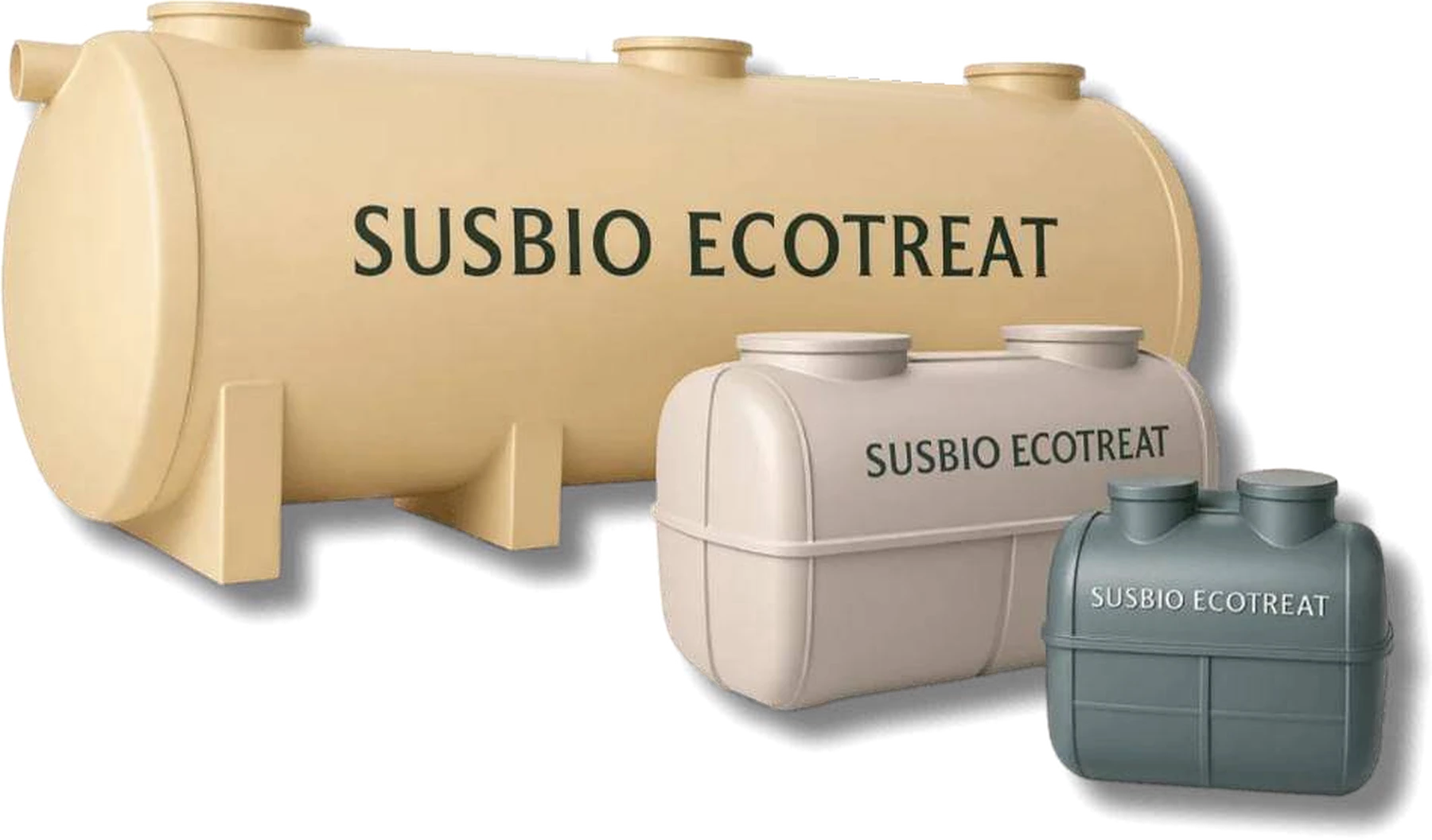 Wastewater and sludge
Sewage Treatment · EcoTreat
A compact plant below ground that turns sewage into water for reuse.
Learn More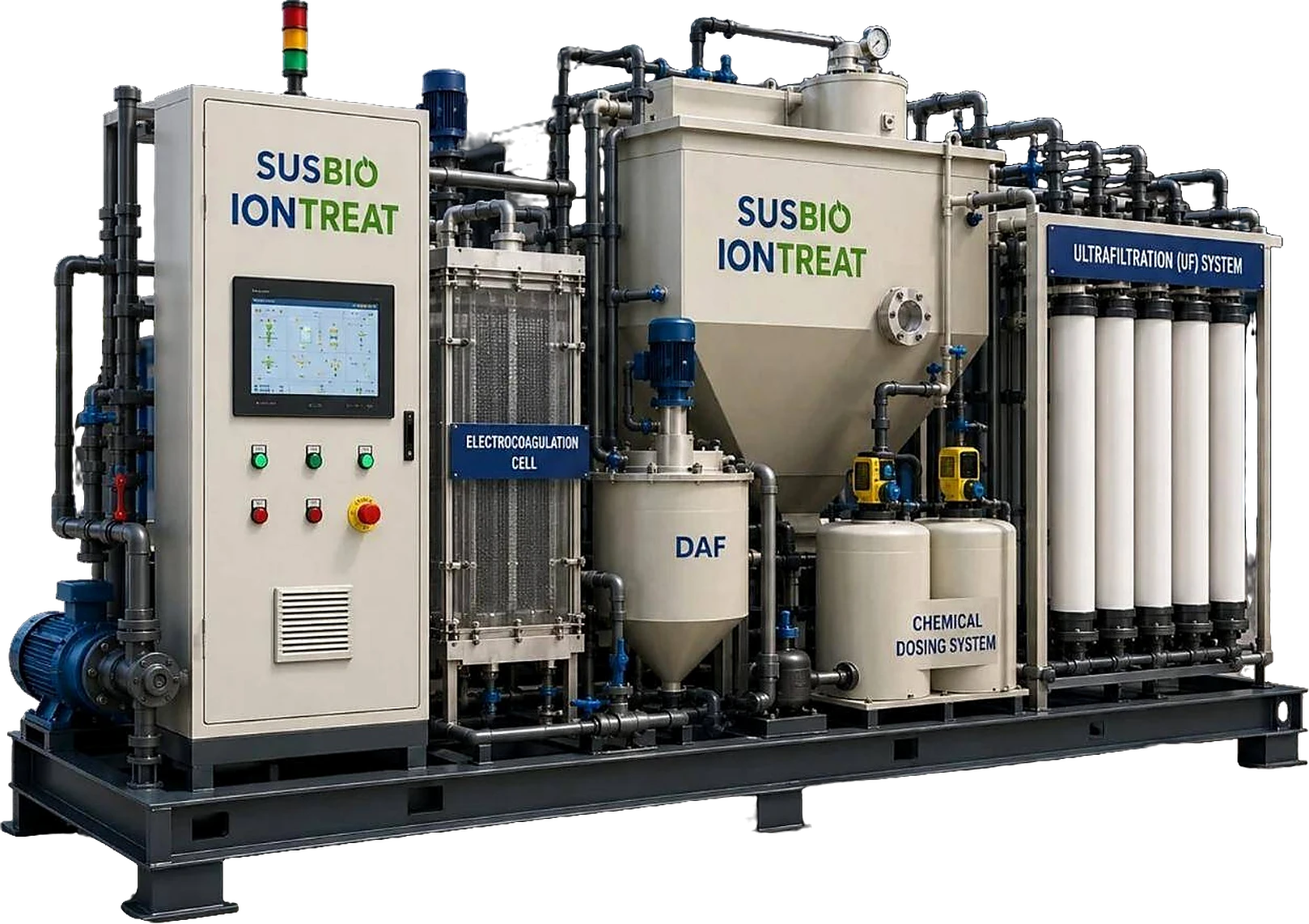 Wastewater and sludge
Effluent Treatment
Treatment planned around what an industrial process discharges.
Learn More