Electrochemical treatment needs no bacteria and works from day one.
Effluent Treatment
Effluent Treatment, Designed Around What Your Process Discharges.
Industrial wastewater changes from one process to the next. We start with your effluent, then propose treatment that meets the discharge standard you are held to: SUSBIO's IonTreat skid, a conventional civil-built ETP, or a repair of the plant you already have.
Our Approach
- Sample and analyse.
- We test what your effluent contains and how much flows each day.
- Recommend.
- A treatment train matched to the effluent and the standard you must meet.
- Install.
- A packaged IonTreat skid, or a traditional ETP with its civil works, planned around your operations.
- Repair.
- We repair and upgrade ETPs already on your site, whoever built them.
- Maintain.
- Regular servicing, so the plant keeps meeting the standard.
Treatment time
Treated in Under an Hour. Working from Day One.
Biological plants need 2 to 4 weeks to grow their bacteria. Electrochemical treatment starts the day it is switched on.
IONTREAT figures published by SUSBIO. We confirm suitability by analysing your effluent first.
30–60minutesIn the electrochemical reactor, per batch of effluent.
See the difference
From a Foaming Outlet to Water You Reuse.
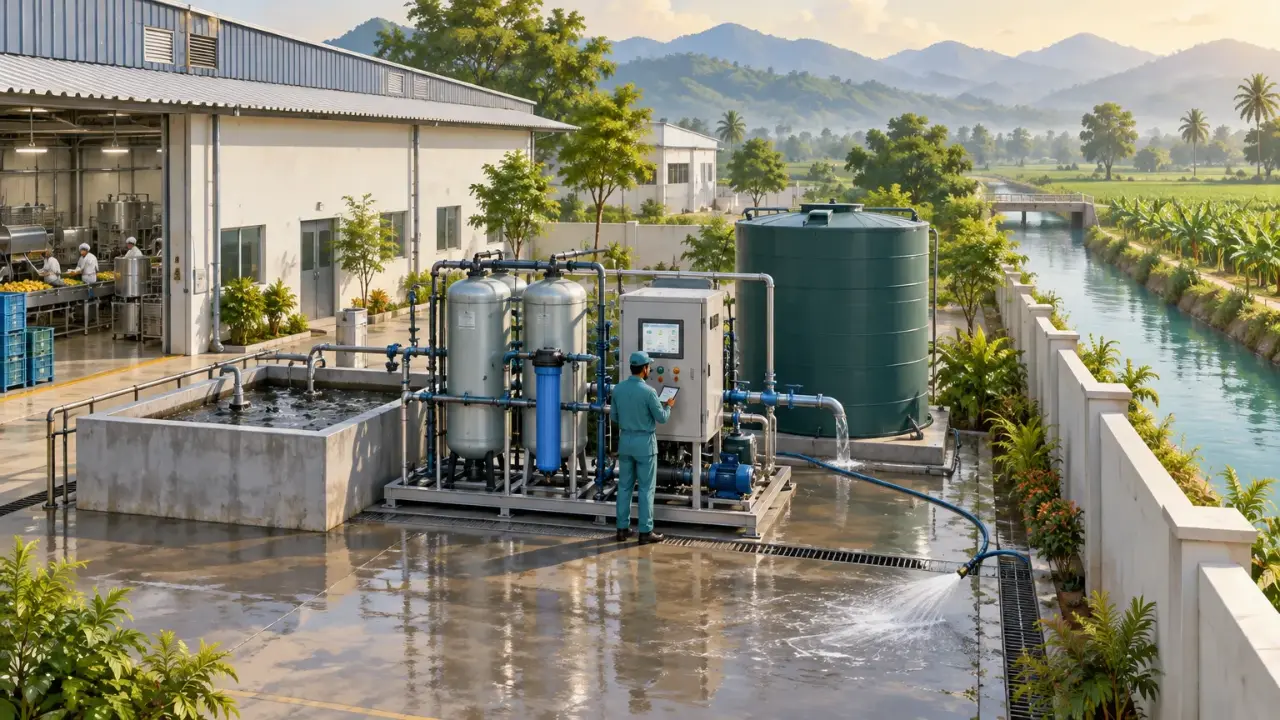
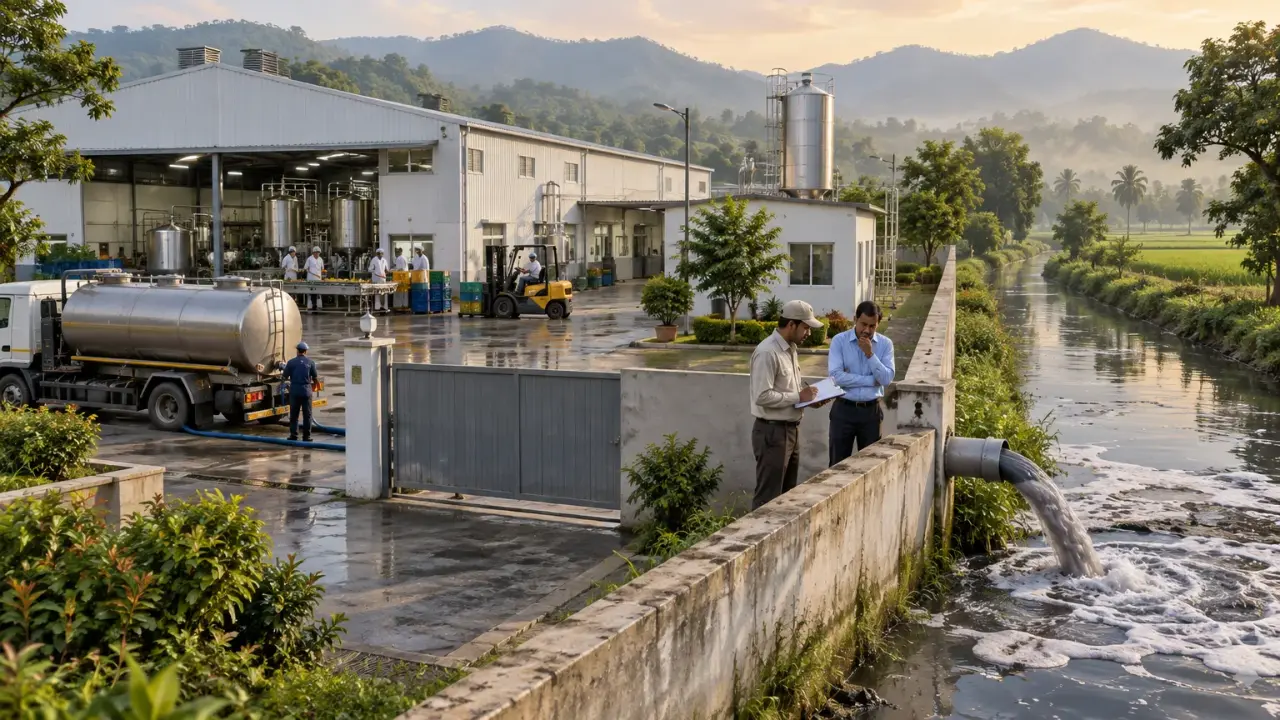
- Discharge outside consent limits
- Notices and the risk of closure
- Fresh water bought for every process
- Treated to your board’s standard
- Records ready for inspection
- Water reused where quality allows
Illustrations.
Myth vs fact
What Sites Assume About Effluent
Treated, it typically reaches COD under 50 mg/L.
A 10 KLD skid needs about 15 m².
IONTREAT figures published by SUSBIO.
One technology we offer
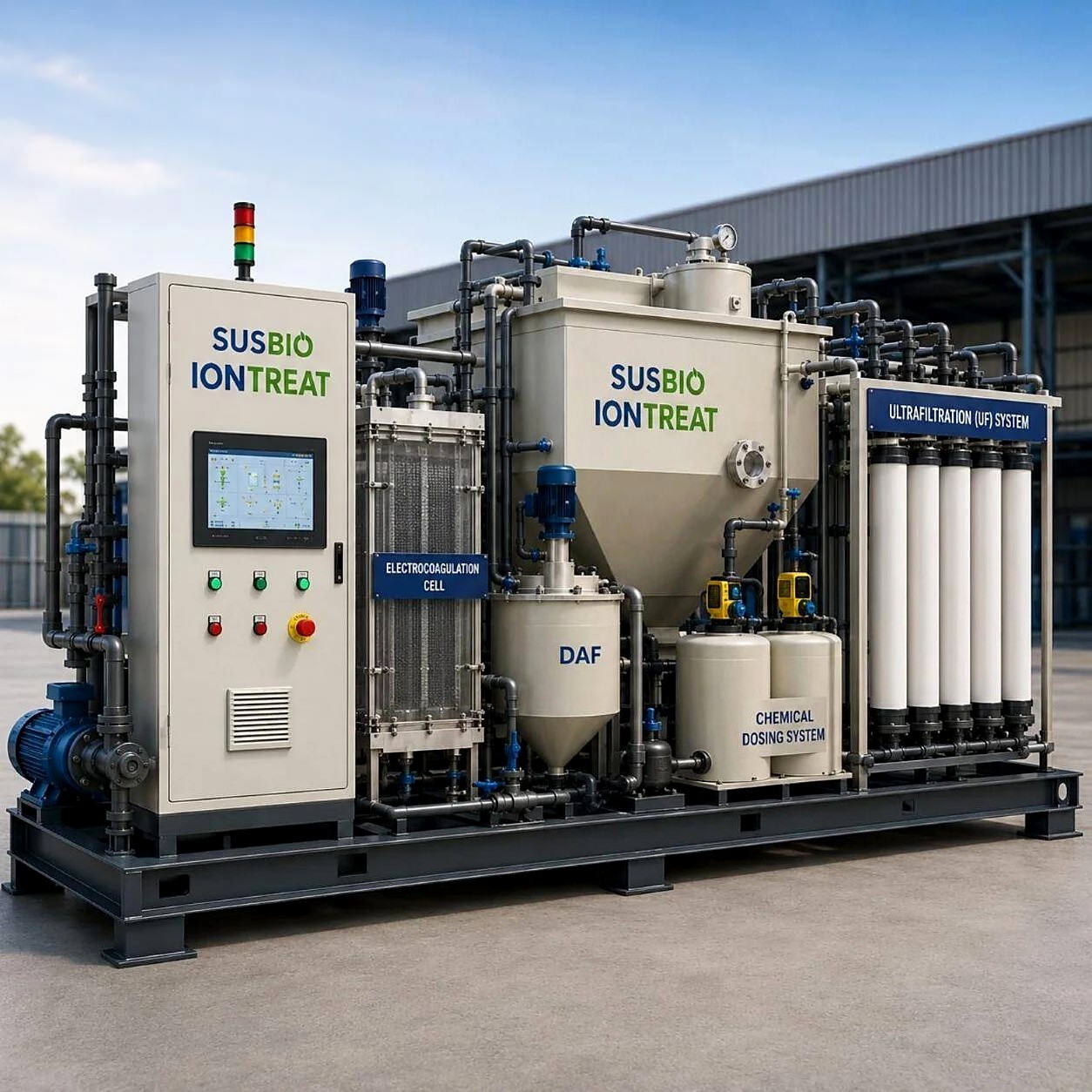
Electricity Does the Work Bacteria Would.
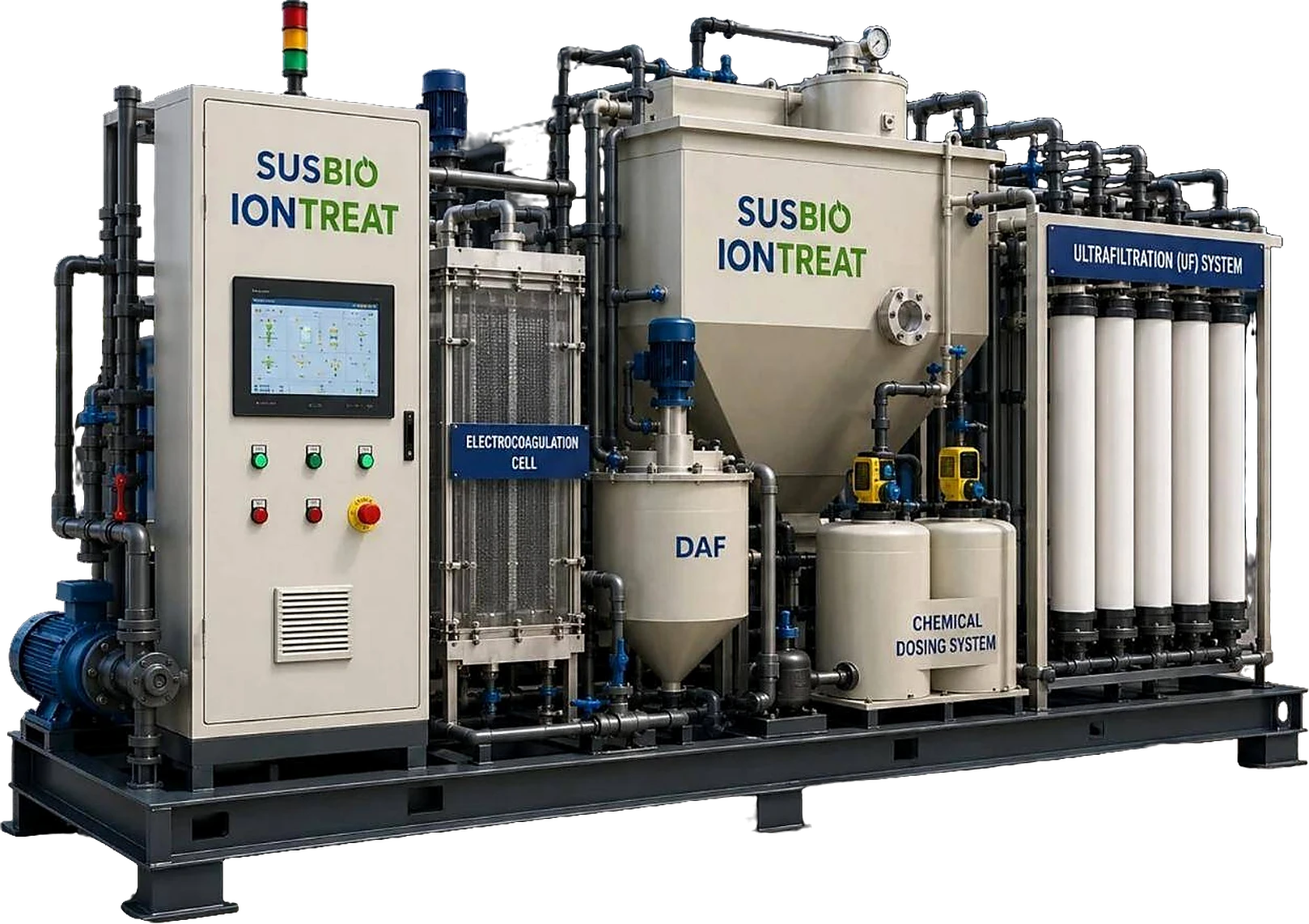
SUSBIO's IONTREAT is built for effluent with oil, grease, detergents and colour.
- Coagulate, oxidise, floatAll in one reactor, in 30 to 60 minutes.
- Handles shock loadsEmulsified oil and detergents that upset biological plants.
- About 15 m² for 10 KLDCan sit on top of the equalisation tank.
Render and figures: SUSBIO (susbio.in).
How it works
Five Steps to a Reuse-Ready Outlet
- Screen and trapSolids and fat removed.
- EqualiseFlow and strength evened out.
- Electrochemical reactorTreated in 30 to 60 minutes.
- Float and filterAir flotation and ultrafiltration.
- Reuse or dischargeTypically within CPCB and NGT limits.
How it compares
Electrochemical Against Biological
| Compared | Electrochemical (IONTREAT) | Biological plant |
|---|---|---|
| Start-up | Working from day one | 2 to 4 weeks to grow bacteria |
| Shock loads and emulsified oil | Handled | Can upset the process |
| Running cost | About ₹38 to ₹45 per kL, published upfront | Depends on the plant |
| Outlet | Typically COD under 50, BOD under 10 mg/L | Depends on the plant |
IONTREAT figures published by SUSBIO. Running cost excludes labour and maintenance.
Made for
Sites with Process Wastewater

Hotels and commercial kitchensGrease and detergents at the source.
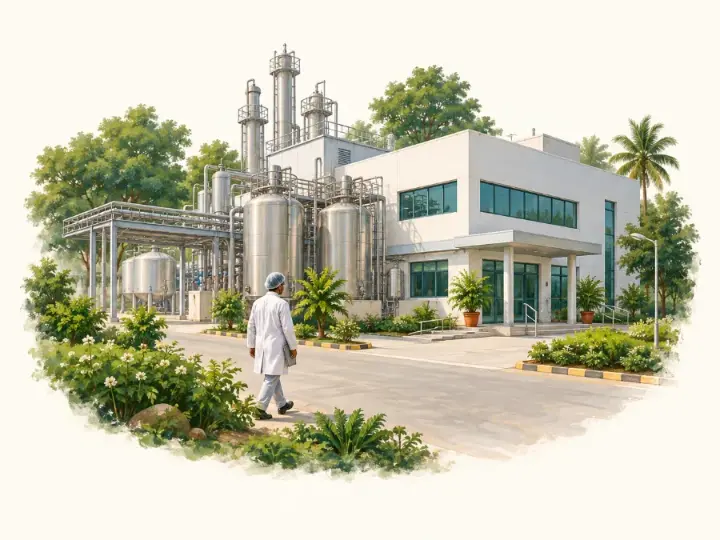
Pharma and chemicalsA complex, changing stream.

Textiles and laundriesColour and detergents removed.
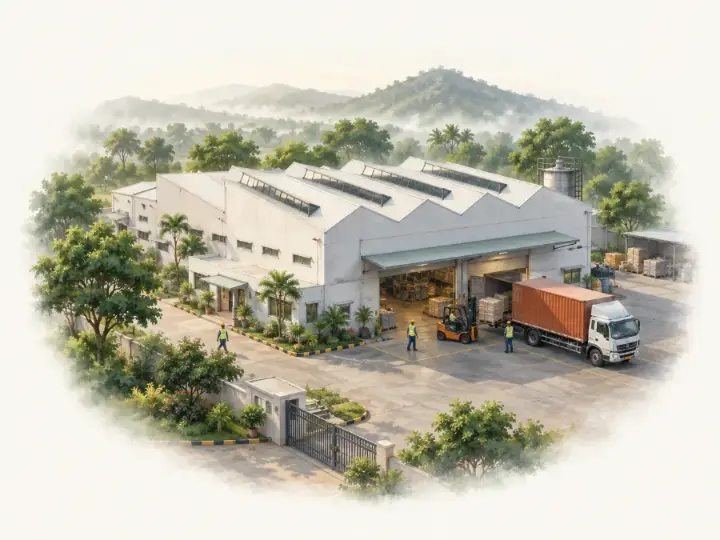
Food processing and dairyFat, protein and washing water.
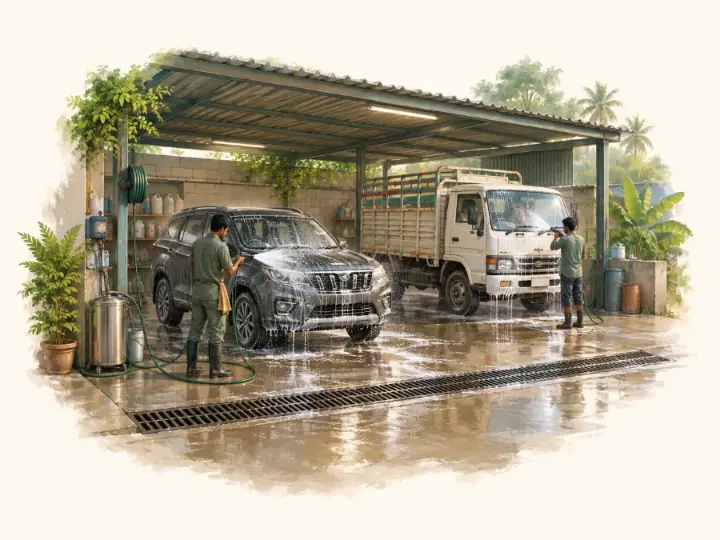
Vehicle washingOil and silt out, water round again.
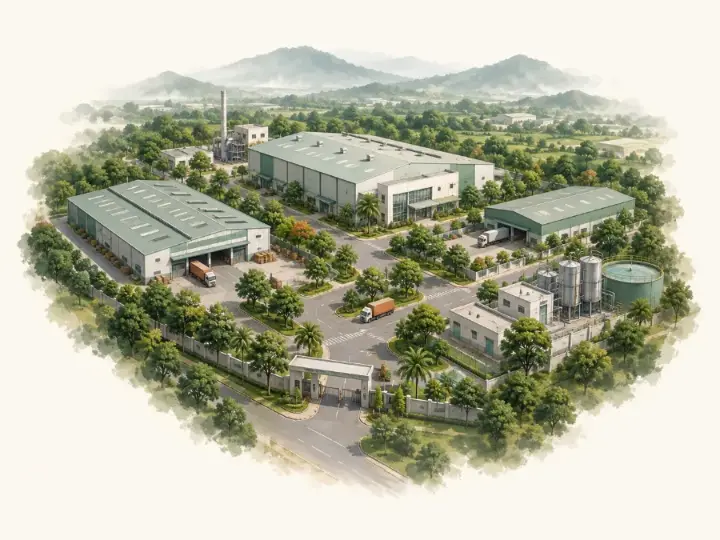
Industrial parksShared treatment for several units.
Questions
Can treated effluent be reused?
Often, depending on its quality and your process. The analysis tells us what is possible.
Do you work with existing plants that are not meeting the standard?
Yes. We repair and upgrade existing effluent treatment plants, including civil-built ones we did not install. We start by testing what the plant receives and what it discharges, then fix or add the stages it needs.
Wastewater and Sludge
Sewage, septic sludge and industrial effluent each need different handling. We help you choose the right system, and we stay to keep it working.